Unity Tips | Part 7 - Events and Messaging
Passing messages between GameObjects is something you'll do all the time, so it's important to know the best ways to do it.
Passing messages between GameObjects is something you'll do all the time, so it's important to know the best ways to do it.
VFX Graph is the new way to draw particles on the GPU, so let's push it to the limit and render a million particles.
By combining Shader Graph and VFX Graph, we can create a reactive puddle effect which draws ripples together with raindrop particles.
Unity's flexible prefab system lets you create template objects and instantiate copies anytime. Plus, you can nest prefabs and create variants with different properties.
We can draw outline pixels around a sprite based on whether nearby pixels are opaque or transparent, as long as the sprite has some transparent padding.
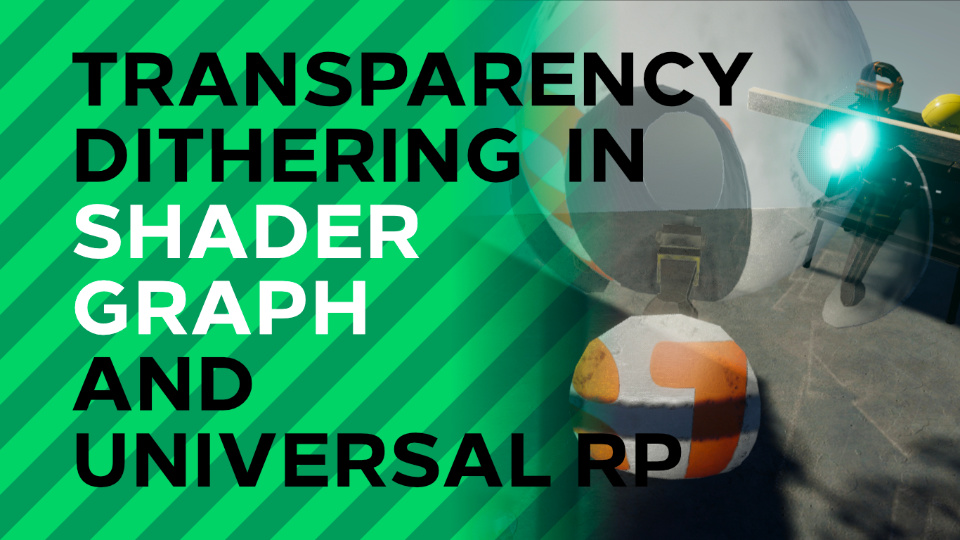
Alpha clipping along a dither pattern can approximate real transparency if viewed on a high-resolution screen, despite using opaque pixels.
Dissolve is often used for destroying objects in games, or in reverse when spawning them in. Shader Graph makes it simple to make effects like these!
Surfing the seas in Zelda Wind Waker is so iconic because of the stylized water effect, which we can recreate with a Voronoi-style noise texture.
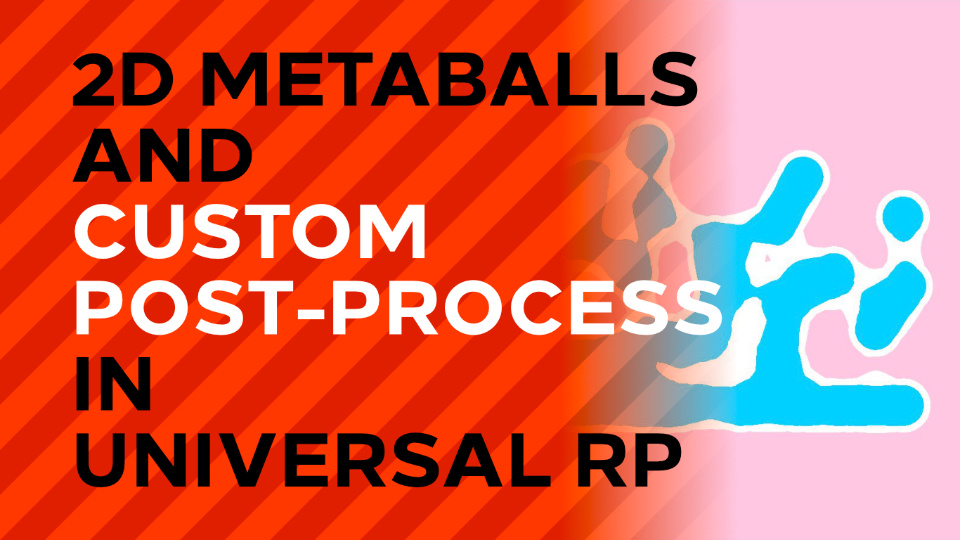
Metaballs are a method of simulating smooth surfaces, and by adding physics components to each one, with a bit of shader magic, we can simulate simple fluids.
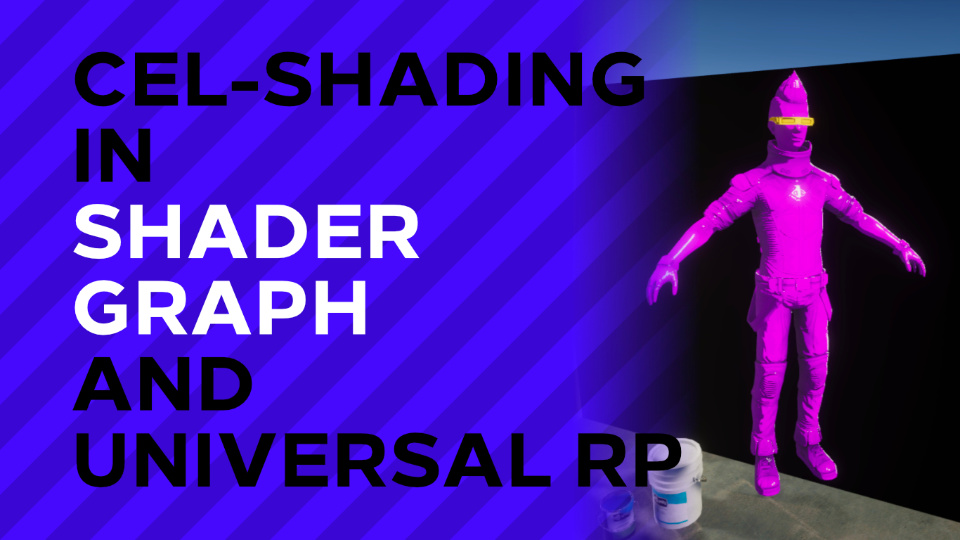
With a bit of added custom HLSL code, we can use Shader Graph to create a cel-shaded lighting effect.
With some noise, color ramps, and UV calculations, we can burn away the edges of the screen.
For an easy sketched look, we can combine depth-, color-, and normal-based outlines with an overlaid sketch texture which animates in discrete time steps.
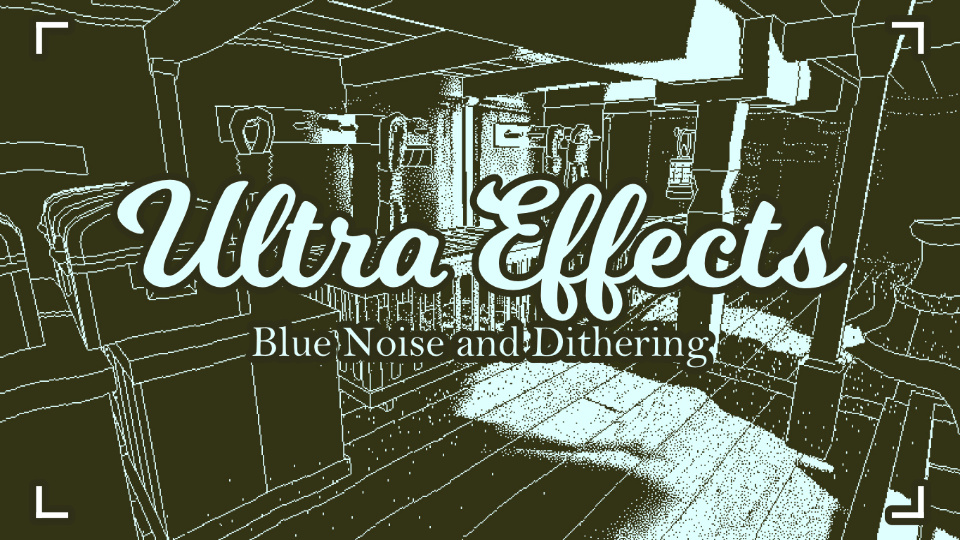
Return of the Obra Dinn used a beautiful stable dithered effect in 3D. We can do something similar in screen space to implement a two-toned noisy effect.
A kaleidoscope uses angled mirrors to produce a psychadelic image, which we can recreate in shaders with polar coordinates and thresholding based on angle.
Scanlines and fuzzy visual glitches are all you need to create a simple and convincing CRT screen effect.