I was the Asset Store Publisher of the Week
FREE ASSET PACK! Now that I have your attention, for this week only, get a free copy of Toon Shaders Pro, plus everything else I've made is on sale.
FREE ASSET PACK! Now that I have your attention, for this week only, get a free copy of Toon Shaders Pro, plus everything else I've made is on sale.
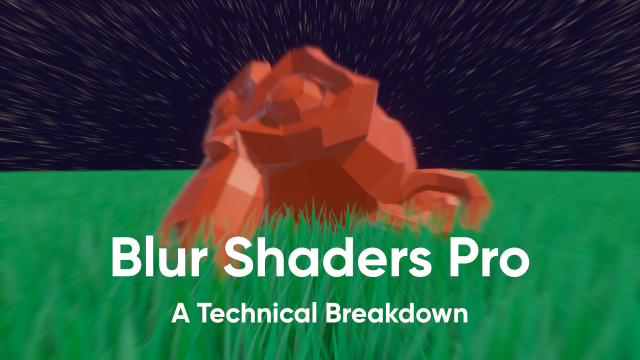
Why sell an asset pack, when you can deprecate it and release it for free under the MIT license? Learn how I made a two-pass Gaussian blur post process with sparse kernel support.
With some noise, color ramps, and UV calculations, we can burn away the edges of the screen.
For an easy sketched look, we can combine depth-, color-, and normal-based outlines with an overlaid sketch texture which animates in discrete time steps.
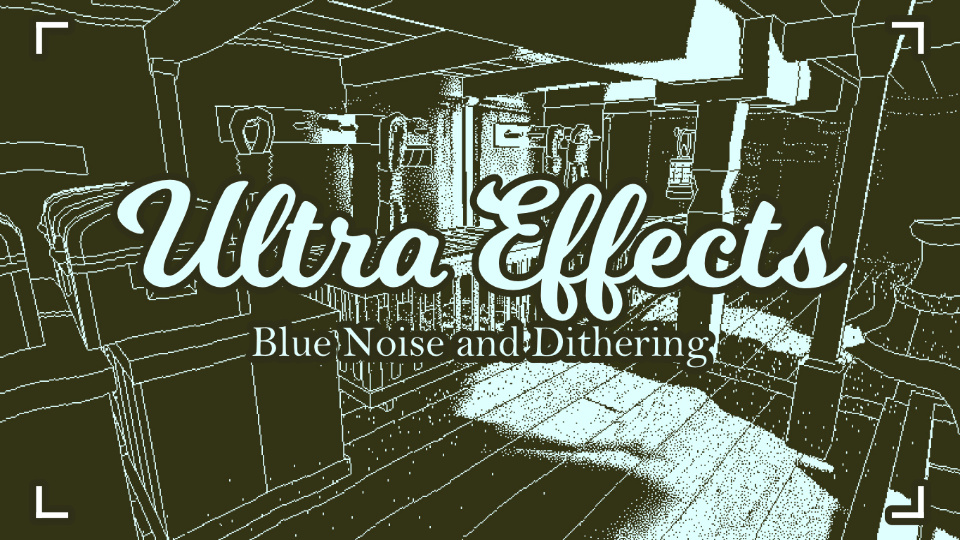
Return of the Obra Dinn used a beautiful stable dithered effect in 3D. We can do something similar in screen space to implement a two-toned noisy effect.
A kaleidoscope uses angled mirrors to produce a psychadelic image, which we can recreate in shaders with polar coordinates and thresholding based on angle.
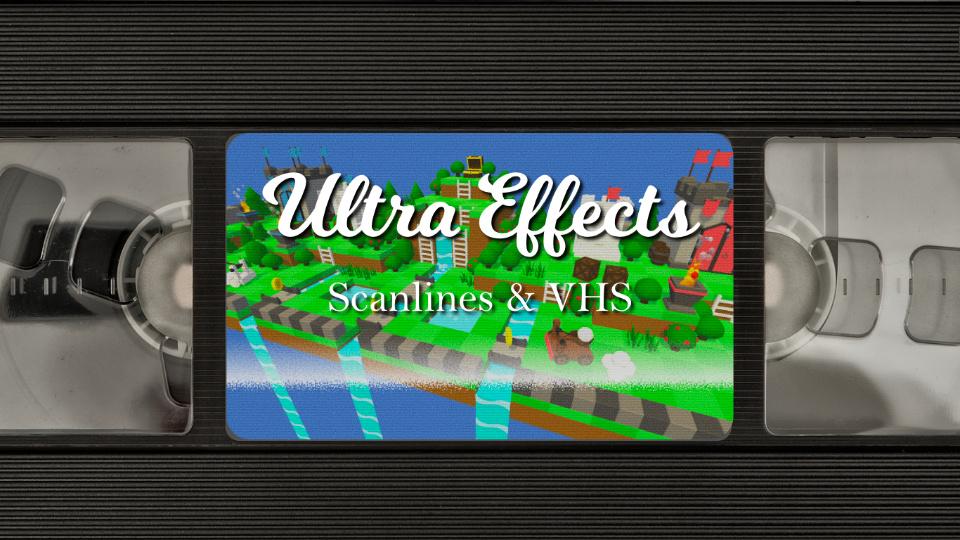
Scanlines and fuzzy visual glitches are all you need to create a simple and convincing CRT screen effect.
In Portal, you can see portals in portals, which requires recursively mapping the view from one portal in another portal.
Firing portals and snapping them to the edge of a wall without overhangs involves a lot of fiddly raycasts. Plus, let's shoot portals through portals, Narbacular Drop-style.
When an object travels through one portal, its momentum must be conserved. Plus, we need to render a clone whenever the object is partway through a portal.
Using an oblique projection matrix to set up a view frustum is crucial for properly culling objects behind the portal plane without culling anything in front of it.
Rendering the view from behind one portal on the surface of its paired portal requires a bunch of space transformations and stencils.
Spyro renders the skybox of an upcoming level inside the portal for that level, then swaps the active skybox as you cross its threshold.
Separating out different color channels and offsetting them using UVs can emulate the way wavelengths of light bend by different amounts in a real camera lens.
Classic photographic film has surface imperfections which mean more or less light is captured. We can recreate it digitally with random noise and add film bars based on aspect ratio.