Ice Refraction in Shader Graph and URP
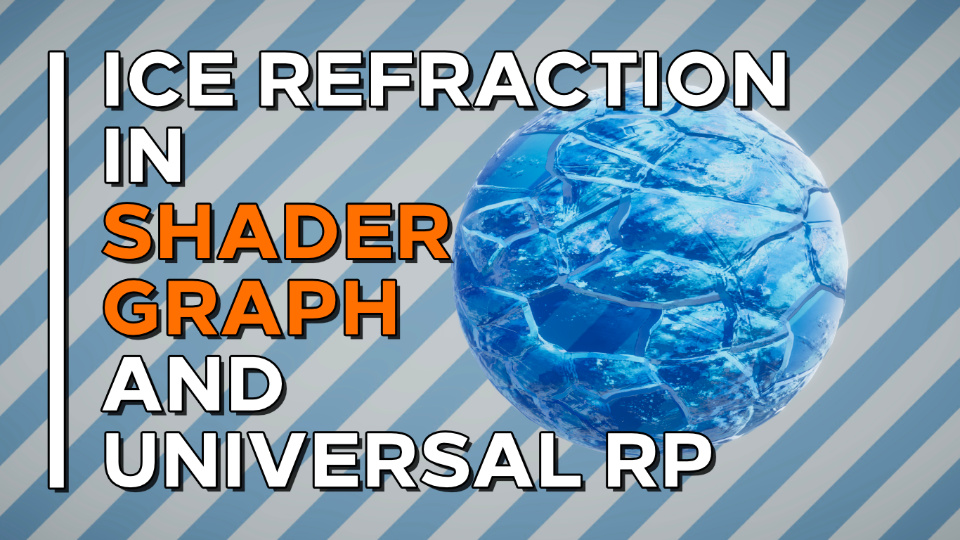
We can modify the normal vector of a surface to change the way lighting falls on it, and distort the Scene Color to refract the view behind the object.
We can modify the normal vector of a surface to change the way lighting falls on it, and distort the Scene Color to refract the view behind the object.
It's always possible to iterate on an effect, so we'll add features like grainy and wobbly imperfections to this hologram.
Holograms are a staple feature of futuristic sci-fi games, and it's as simple as applying scanlines vertically and adding Fresnel lighting.
VFX Graph is the new way to draw particles on the GPU, so let's push it to the limit and render a million particles.
By combining Shader Graph and VFX Graph, we can create a reactive puddle effect which draws ripples together with raindrop particles.
We can draw outline pixels around a sprite based on whether nearby pixels are opaque or transparent, as long as the sprite has some transparent padding.
Alpha clipping along a dither pattern can approximate real transparency if viewed on a high-resolution screen, despite using opaque pixels.
Dissolve is often used for destroying objects in games, or in reverse when spawning them in. Shader Graph makes it simple to make effects like these!
Metaballs are a method of simulating smooth surfaces, and by adding physics components to each one, with a bit of shader magic, we can simulate simple fluids.
With a bit of added custom HLSL code, we can use Shader Graph to create a cel-shaded lighting effect.