Image Effects | Part 7 - Wrapping Up
In this article, we'll explore several shader concepts, including space transformations, structs, textures, shaders functions, and color spaces.
In this article, we'll explore several shader concepts, including space transformations, structs, textures, shaders functions, and color spaces.
The Kuwahara filter removes noise from images, but it can also be used stylistically for an oil painting-like effect.
Retro consoles had a limited resolution and color palette, which we can recreate in Unity by downsampling and posterizing the screen.
The Sobel filter is great at detecting edges, and we can use its output to outline objects in the scene or make everything look like it's neon-lit.
Box blur and Gaussian blur are two popular blurring algorithms. We can make these blurs significantly more efficient by using two passes, because they are linearly separable.
With the depth buffer, we can color objects lighter or darker based on how far they are from the camera for a simple silhouette effect.
One of the simplest image effects involves basic color mapping. Greyscale filters map from RGB to a single value, while sepia tone uses a matrix of values for a new RGB color.
In this article, we'll go through a crash course on writing image effect shaders for Unity's built-in render pipeline.
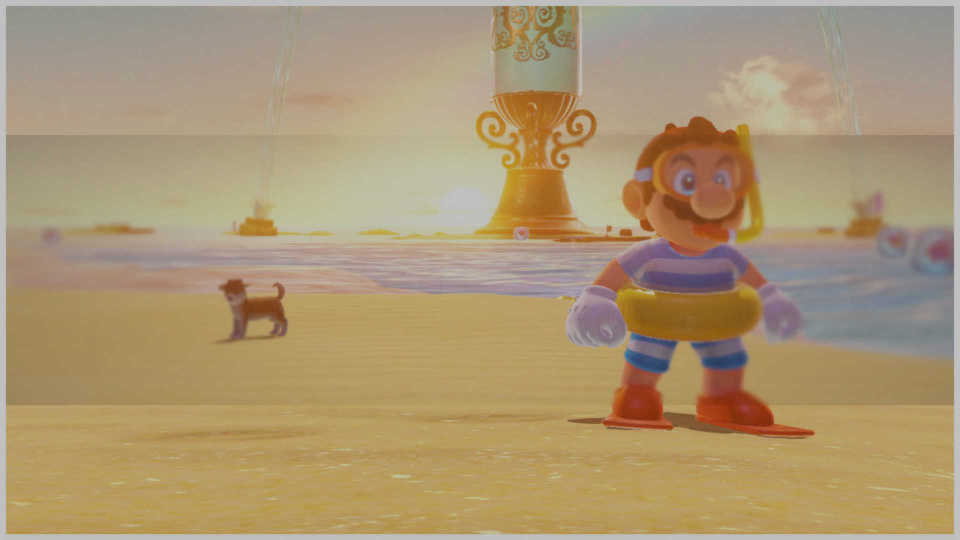
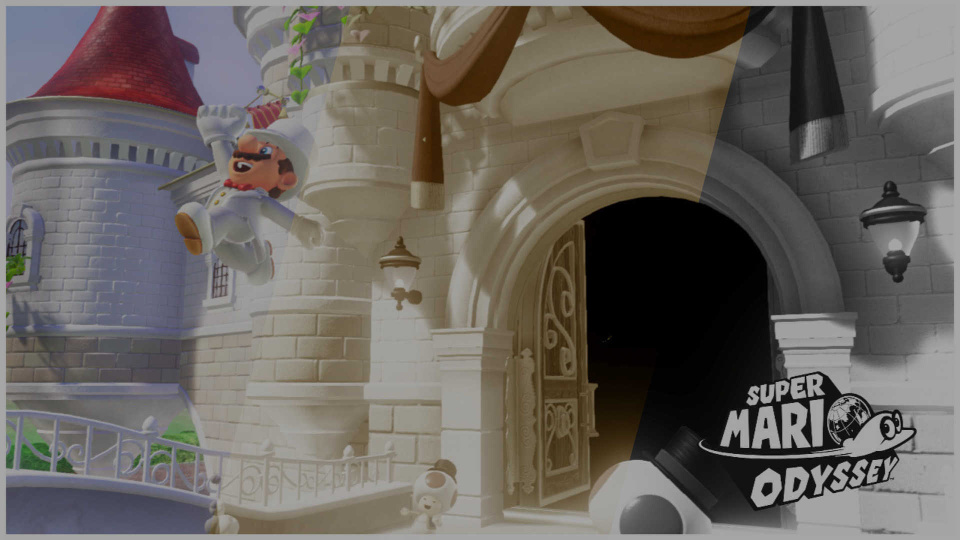
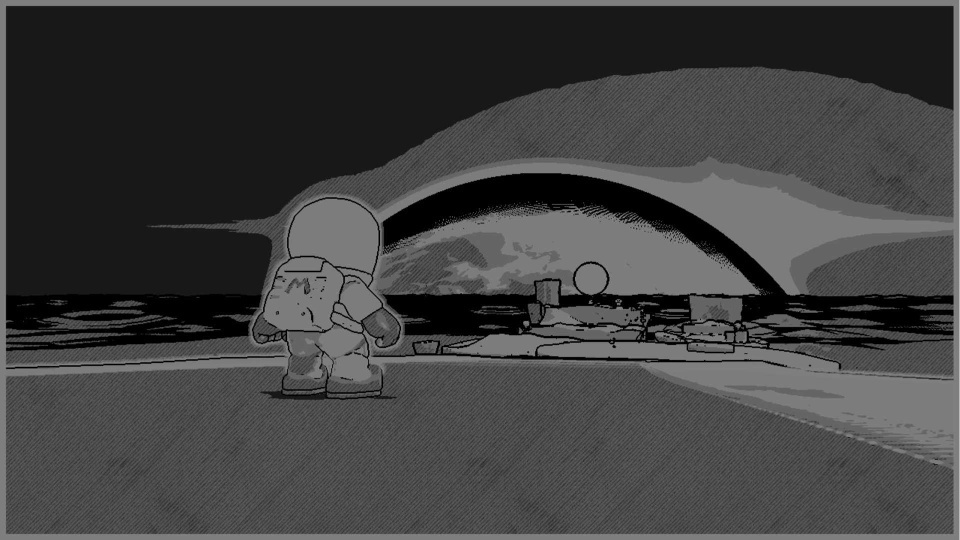
Super Mario Odyssey comes with a Snapshot Mode, in which you can apply image filters to the game. In this series, we'll recreate a bunch of those filters.